There’s something strangely satisfying about claymation. Maybe it’s the memories I retain of playing with Playdoh when I was little.
Watching claymation takes me back to a time when I had no worries beyond sharing my toys with my sisters. As I pressed the Playdoh into various shapes with my hands or with the stencils that the company provided with their rainbow-colored doughs, I remember the smell of the clay and the way my hands left fingerprints on it. It’s a viseral memory and, as I said, a calming one.
So, right from the start, Shaun the Sheep: The Beast of Mossy Bottom, put my mind into a younger and more relaxed state. Let’s be honest- with the way things have been going lately on the national and international stage, calm is becoming somewhat of a precious commodity.
Parents put your mind at ease, this is a film that can be enjoyed without the shadow of artificial intelligence popping out of the screen and making everyone frantic about the future or humanity’s inability to face any problem, even one we created, with a united front. That’s not even considering our propensity to make it worse with our own insecurities.
But I digress.
The Beast of Mossy Bottom is listed as a comedy horror on its Wikipedia page, a designation which I agree with. Horror doesn’t have to be scary to be horror. What I believe makes a horror show “horrible” is unanticipated (negative) consequences stemming from acts done from love or a desire to be of help to others.
There are lots of unanticipated and problematic consequences in this story.
It begins simply enough. (Spoilers ahead, readers beware.) Shaun’s flock creates a secret pumpkin patch. In their hidden field, they are producing pumpkins so lovely that the youngest member of their flock, Timmy, begins to dream about making the perfect jack-o’-lantern from one of them.
When the Farmer has a mishap and smooshes all the pumpkins, Timmy is heartbroken. In an effort to make Timmy smile again, Shaun puts on his mad scientist hat and develops a fast-growing formula to restore the pumpkin patch. He is successful at his endeavor and everyone is smiling once again. (The most sincere pumpkin patch from Charles Schulz’s Peanuts world comes to mind.)
But then, in an effort to be more attractive to a local veterinarian whom he wants to invite to the Halloween dance, the Farmer uses Shaun’s secret formula on his bald head. The formula works incredibly well, but doesn’t stop, causing the Farmer’s hair to grow and grow, with disasterous results. (Mickey Mouse’s animating spell from the Sorceror’s Apprentice of Fantasiafeels applicable here.)
The rest of the film is spent trying to fix the problems in the pumpkin patch and with the Farmer’s exponential hairgrowth, an issue that is made even thornier when the veterinarian ships the Farmer off to Bigfoot Island because she believes he’s a missing link who belongs with his own people.
As you can see, everyone gets into trouble because they are acting with the very best of intentions. A horror show, indeed.
Beyond the satisfying appearance of the film and the excellent storytelling, there is another hidden aspect of The Beast of Mossy Bottom which I believe deserves a mention. No one speaks in the film.
At first, I found the non-verbal way in which the characters told the story to be somewhat distracting. I wanted to hear cute voices to match with the adorable characters onscreen. But after the first few minutes, I didn’t even notice because the story is told through pantamime and facial expressions, a universal language rather than the limited form that the spoken word forces storytellers into.
This could be a very helpful film for parents who have children who are non-verbal or have difficulty communicating. It is a learning tool like a book. And even if the child cannot speak about the film to his or her parents, then, at the very least, her parents and guardians would have something to talk about with him or her.
“Look at Shaun the Sheep.” I can almost hear them say. “What a silly thing to do. Why do you think Shaun is doing that?”
In my mind, the standout moment for modeled behavior in The Beast of Mossy Bottom is when the Farmer, changed by the magical formula into the Beast, appears upon his farm, having fled the veterinarian’s office in town when his hair started to grow like mad. The sheep and the Farmer’s faithful dog have no idea what has befallen the Farmer. They only know that a huge, hairy creature is coming their way.
They flee in terror, blockading all of the windows and doors to the Farmer’s house, so that, when the Farmer finally finds his way back home through his own terror and confusion, he can’t get in.
Oh, the horror. When faced with the unknown, how often do we run away, shutting ourselves in the safest places we can find, which are hopefully out of the reach of the monster outside our door? When, in reality, the monster is just the shadow of our friend and he needs our help. At least, this is the case in the children’s movie I’m discussing today, but if we take this metaphor a step further and apply it to the real world, I think we may find that there are elements that remain true.
For example, I choose not to demonize (shut the door on) those who have different political beliefs than me. I choose to believe that when our leaders and elected officials are making policies about anything that affects the future, which belongs to young people like my daughter, that they have not only their personal and best interests in mind, but also desire the best result for everyone on the planet.
And, if this second assumption is not true, I choose to believe that those around me will recognize this, like I do, and replace the leaders in their appropriate time (election cycle) for someone who does fit that expectation.
Are we living a horror story when it comes to AI? I say, not yet. But there is much work to be done to make sure that such a problematic consequence does not come from a creation that we originally made to help humanity, like Shaun and his fast-growing formula. Let’s not ruin the world or our lives, just because we wanted to reconstitute a smooshed pumpkin and dry a child’s tears.
I hope you all get a chance to watch the film with your families. Please take a minute to drop me a note if you do.
Thanks for reading,
Heidi
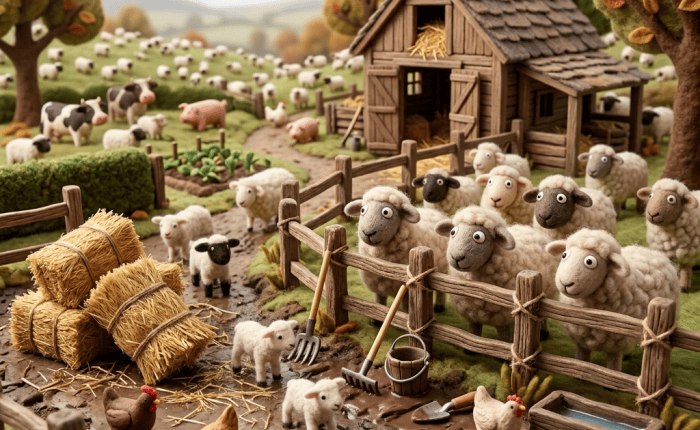
WordPress AI’s vision of ‘the Most Sincere Pumpkin Patch’ as a prompt. Tell me, what do you see?
Much has been said over the past couple of months about the new film, The Odyssey, by master movie maker Christopher Nolan.
From the sets, costumes, and acting, extending even to the physiques of those involved in the film, no stone has been left unturned in the universal search for meaning from this ancient work of art, which was reimagined and introduced to the modern audience.
Even the translation and author (Emily Wilson) whom Nolan utilized to develop his script has been brought into the fray, with criticism lobbed at both Nolan’s unique vision for his masterpiece as well as the focus of his interpretation.
For, at its root, that is what everyone from Elon Musk and on is talking about, Nolan’s individual creation, how it fits into the universal narrative of story, and how their (the commentators) individual viewpoints differ from Nolan’s own.
I’d like to contribute my particular viewpoint of the film, which I’ve seen three times at this point (as of September 6, 2026). I will not highlight differences in Nolan’s interpretation versus my own for I think we’ve had that type of thing ad naseum.
Instead, I will apply symbols from the film to my work, the Light Congress, which is a narrative story about the soul’s journey, just as much as the Odyssey is the same. Perhaps, with a comparative analysis of a few similar symbols in both works, we can come to a new understanding of the spirit worlds, similarities between the paths of self knowledge from ancient times to today, and a new appreciation of the genius of Nolan, beyond a simplistic criticism of how he shot a scene or his use of modern language in a historical drama.
One more note, before we move on, my favorite element of Nolan’s film was the music. I watched a ‘making of’ documentary of the Odyssey on Disney+ and learned that Nolan hired musicians who utilized ancient instruments to make the haunting soundtrack for the film.
As the notes rose from the flute player’s mouth and fingers, it was like the sound drew me into the screen and I walked with the Greek hero as he faced the monsters, forces of nature, and his own countrymen in his epic journey home again. Thus is the magic of music, a universal language and bridge to the divine, and why it was my favorite element of the film.
Now, for a few similar symbols from my work and Nolan’s own, and what that might mean about the universal phenemonen which could be called the Hero’s Journey. As we say in the Light Congress, game on!
Giants in Armor, the Laestrygonians
In Nolan’s film, Odysseus (played by the incomparable Matt Damon) and his men are desperate for food and supplies as they make their way from Troy to Ithaca. On a random island, they enter an ancient forest and come upon a Child in the form of a giant in well-formed silver armor.
It is unclear if the Child speaks their language, for their request for help is met with a cry of fear and the Child runs from them, deeper into the woods, summoning his family who, to the detriment of Odysseus and his crew, turn out to be even larger, angrier giants, who are capable of defending themselves and their territory, which they do, to disasterous effect.
It must have been scary, in the time before translators, maps, what-have-you, to venture outside of the confines of your known world, by which I mean, the place of your birth and the tribe who taught you how to speak and move through the world. How would it be possible to trade or trust with another group who might not share your values beyond wanting to protect the resources that they have against your depredations?
Think of the scene prior to Odysseus and his men meeting the Laestrygonians. They are sacking a town, presumably on the coast of the Mediterranean, but it isn’t so distant or unknown from Ithaca because one of Odysseus’s men speaks the language of the townspeople and is able to translate when Odysseus asks why they burnt their town rather than give supplies to him and his men.
Think of the unfortunate villager’s response, “Because we thought you were the Sea People, coming to loot and burn.” Rather than giving their resources to the enemy, they razed the village.
I would posit that if the village had had the fighting power of the Laestrygonians, we would have seen a battle scene on the shore, similar to what happened next, rather than the destructive fires.
If you cannot defend what you have and you do not want to strengthen your enemies, you burn it to the ground. It isn’t an elegant solution, but what is one to do when faced by overwhelming forces outside of your control?
In the Light Congress, my version of the Laestrygonians arrive in Chapter 26 and I call them ‘the Blades of Eternity.’ Read it here: https://thelightcongress.com/2026/07/05/chapter-26-eirene-among-the-blades-of-eternity-and-formless-legions-of-mars/ (If you don’t want to donate to access the rest of the chapter, set your amount at $0 and it should let you through the gate. That being said, I would greatly appreciate anything you could spare to keep a roof over my head and food in my mouth.)
In my version of the soul’s journey, the Laestrygonians/Blades of Eternity sort or cull the unmanifested and embodied thoughts of a giant before they dance through the skies of the Inner Worlds to emerge into the Outer Worlds. These ‘thoughts’ could be Odysseus and his men, hungry warriors from another place who need resources to live as much as any in the territory in which they find themselves.
Rather than metaphorically burning themselves to the ground, the Blades of Eternity return the questing thoughts to their source so that they can emerge again at a more convenient time rather than taking up precious resources that could be used by someone else.
This is a more poetic way (or perhaps child-like viewpoint, which is something I embrace) of confronting the sad reality of the material world in which there are not always enough supplies for all and we prioritize our own tribe, whatever that may mean to you, over the needs of the Other or outsider to our home and hearth.
A militaristic response to the visitors to our shores is in direct opposition to the Golden Rule or ‘Law of Zeus’ as Nolan puts it so wonderfully in his film. How would you like to be treated if you were in need of food, shelter, and a friendly face, far from the home of your birth? I imagine you would like such things to be given to you without delay, preferably in a friendly and welcoming manner.
That is not what Odysseus and his men receive nor what the unmanifested thoughts of the giant from my story get either.
Let’s ask ourselves, what does this mean from a universal viewpoint? I would say, it means humanity has not changed very much, from ancient times to our own, presumably enlightened, era.
Scylla and Charybdis
Here be dragons. To digress a minute, I love how mapmakers from times past didn’t even attempt to hide their fear of the unknown and potentially dangerous places outside of the known world.
In an artistic representation of this fear, they created chimeric images as Carl Jung would call them, of monsters and creatures of legend, lurking at the edges of the map.
Jung believed the mind creates chimeric images when one has two or more opposing ideas and desires to integrate both ideas during the process of individuation. In the map metaphor, the dragon on the edge of the map stands for danger, certainly, but also opportunity.
Think about the legends of dragons, guardians of gold, maidens, wealth untold. There is danger in facing the unknown and you may lose parts of yourself that you didn’t even know you had, such as an innocence of spirit or unjaded heart. But, if you can face the unknown and return successfully to the lands you know, you could return with treasures beyond belief and the imaginations of those you left behind in your journey into the unknown.
That risk, the fight between your own spirit’s desire to experience something new or remain comfortable with the known, could be represented by the dragon or sea serpent.
Let’s take this metaphor back to the Odyssey. Odysseus and his men face two ancient monsters out of legend because they are at a critical juncture on the sea route home. One is a mysterious undersea creature at the center of an inescapable whirlpool; the other is a spider-like (in Nolan’s interpretation) mountain spirit.
One of the monsters, by their presence in the sea, represents the subconscious mind. That which we do not acknowledge can be far deadlier than that which we acknowledge for we can resist that which is known, like the monster hiding in the mountain heights. But that which we don’t know, we can’t even defend against.
Both monsters, like the blood-thirsty Laestrygonians, want to feast on the literal flesh of Odysseus’s men. The hero of our story is given a warning by a seer shortly before this moment. If he goes towards the whirlpool monster, everyone will die. If he heads past the mountain, only six men will be lost.
The pass must be faced, so what is to be done? The answer was obvious for Odysseus who, throughout the journey, consistently tries to minimize his losses in order to get everybody safely home. He chooses the mountain spirit, faces heavy criticism from his men for it and loses their trust, yet the men are safe until the next hurdle on the journey must be cleared.
Did he make the correct decision? I think so; his men disagreed. What is your opinion?
Shadow tries to convince me to dive into the whirlpool to Scylla to “Let’s swim with the deep sea creatures as we were born to do” but instead I change the vision itself, revealing the monster beneath the waters to be nothing but foam and fast currents.
In the universal subconscious mind of humanity, there are scary shadows, chimeric spirits, and presences that mystics and seekers still do not yet comprehend. Does this mean we should leave the exploration of the Inner Worlds for another day? I say no. If we did that, we’d lose the metaphorical boat of mankind.
Instead, I, like Odysseus, say let’s brave the spiders in the mountains, take our losses (the number six is connected in the universal language of the qabalah to the world of the sacrificed gods or Christ for the Christians reading this blog post), and continue on for the good of all.
We will never get home if we can’t find the courage to venture beyond what we already know and understand.
The Siren’s Song or Song of the Undines
In Nolan’s movie, this was my favorite scene, the part where Odysseus asks his men to tie him to the mast of the ship so that he can hear the legendary song of the sirens and live to tell the tale.
The hero’s interpretation of their seductive pull hit a chord within me as something real and true. He described it in a couple of different ways: “all the things you wanted to be and then all the things you wish you never wished for.” “a delicious itch you want to scratch but you find it under the skin and can’t reach it.” “a song of all the promises I failed to keep.” “I don’t really want to go home.”
So what the heck does all that mean? Let’s start by thinking back to our conversation about Scylla, Charybdis, and the meaning of their chimeric appearance in Odysseus’s reality.
The sirens are beings of both the water and land. They have the tails of fish but the ability to breathe air like mortals. Thus, they are spirits of both the conscious and subconscious minds, and could potentially represent the dance of the individuated consciousness between those two mysterious polarities. (In the Light Congress, I call these ‘light’ and ‘shadow’ but I disgress.)
Why is Odysseus on his epic journey in the first place? He was called by the great warrior king Agememnon to honor his responsbilities as the leader of a Greek city state and to support the king of all in his quest to dominate the trade routes of the sea through their conquest of Troy.
Did he want to leave Penelope and Telemachus, his people, and homeland to fulfill his duty to the king? In the film, no. In the written version of the oral story, no.
But once he was out there, facing challenges, fighting against men of various nations, monsters of legend, and the world itself to find his way home again, it must have been quite a seductive adventure. I think we see the phenomenon in the thrill-seekers of today, the people who die on dangerous mountain slopes that didn’t really need to be climbed or others who die through accidents during other risky activities.
What calls us to put our lives in danger for the thrill of the moment?
Then, once we are there in that moment, fighting the battle for the kings of the earth, how on earth do we put that animalistic aspect of ourselves, the one that will literally kill the person next to us for whatever reason, back to sleep again?
The song of the sirens unmasked this primal urge in Odysseus, both its beginning and the place where the proud warrior found himself, on a journey to go back to the home that will never be the same because of what he did on the road to winning the Trojan war.
Through the subsequent chapters of my hero’s journey, I utilize the song of the undines to remind the spirits I meet about loves they have lost on their sojourn through time.
How could someone forget about a love so fierce that it once kept the stars in motion for them? Consider the timeless existence of the gods and goddesses. Consider the actions they’ve taken throughout time, just because they’ve existed for so long. Consider Odysseus’s predicament on returning home even in the course of a single, mortal lifespan.
In my tale, the itch that can’t be scratched is that experience of first love. The experience is so powerful because the first time a person experiences love, you can’t help but think that this feeling, this over-arching need to be in the presence of another person because they are your beloved, is somehow unique to only you. Only you, the person tells themselves, has ever felt this draw, this mysterious force that draws people together, creates families and friendships, and then departs again or morphs into something else, a familiarity that can quash erotic love if measures aren’t taken to prevent such things.
I would dare to say love is a creation of both the conscious and subconscious minds, just as the song of the sirens is. Once you know this and understand its magic, does that make it any less magical? No.
How about any less painful when it changes or ends?
I hope you get the chance to see Nolan’s masterpiece before it leaves theaters and enjoy it as much as I did.
Thanks for reading,
Heidi
A sailing ship follows luminous, curling currents across a moonlit sea beneath dramatic clouds. Image created with WordPress AI.
I recently had the opportunity to watch Colin Farrell’s latest film, The Ballad of a Small Player, and I liked it far more than any of the other reviewers that I could find online when the movie was done. I shall attempt to explain why here.
Also, fair warning, this discussion will have major spoilers for the film. Please do not proceed if you haven’t seen it yet.
Again, major spoilers ahead. Due diligence done.
First, for just a little bit of context if you haven’t seen it, the film is set in Macau, an exotic locale that I have never visited but the crowded and brightly lit casinos were quite familiar as I have been to Las Vegas. The bright lights and lavish interiors of the rooms are beautiful, and they are meant to be so in order to lure high rollers through their doors in order to take their money at the casinos.
Beauty and lavishness aside, I really don’t understand the draw of a place where day blends into night and back again while you gamble away the very thing that keeps a roof over your head and food in your mouth. But, I’m fortunate in that gambling isn’t one of my preferred vices.
We meet the protagonist of the film, Lord Doyle played by Farrell, as he’s waking up in one of these casinos. The room is a mess which suggests he’s been gambling for quite some time. It also leads the viewer to think, despite the evidence of high living, that Lord Doyle has not been successful. If he was, wouldn’t have he allowed the cleaning folks in to straighten the room or at least change the sheets?
The next few scenes continue this failed gambler storyline with the bell boy at the front of the hotel encouraging Lord Doyle to visit another casino because they “may” be willing to extend the unfortunate gambler a line of credit which the current casino is declining to do. Lord Doyle is also given a short deadline to pay off a very major bill and threatened with legal action if he does not comply. It all adds to a growing feeling of pressure and dread which lasted throughout the film.
In the every day world, this pressure to earn, then spend, and earn again, is a vicious cycle. Humanity has become quite adept at providing reasons to spend every cent earned on every day essentials from over-priced housing and food to the luxuries that are required status symbols, the necessary requirements to move up the invisible ladder of the upper eschelons of society into the imaginery rarified air above everybody else.
It’s depressing, isn’t it? To be honest, I had a hard time watching the introduction to this film. I feel enough of that pressure to earn, spend, and conform in my daily life and didn’t really feel the need to explore that discomfort in my free time. But, the minor disruption to one’s inner peace is worth it for what comes next in this metaphorical and highly symbolic film.
Thus, through tremendous pressure to earn money to pay his debts, the stage is set for the rise and/or fall of our intrepid hero. I was completely drawn in by Lord Doyle’s desperate attempts to win money back and delay those who are looking to collect on old debts. From the cut of his brightly-colored jacket to the yellow gloves on his shaking hands, Lord Doyle presented the picture of a well-to-do European on a holiday, whiling away his idle hours in luxury and excess.
The reality is actually quite different from this and the exploration of the differences of the image he’s presenting versus his reality are fascinating. I think all in existence present images of what we want the world to believe while hiding our true selves behind various masks. Why does Lord Doyle do this? Read on…
Enter Dao Ming, played by Fala Chen, a woman who offers lines of credit to struggling gamblers who don’t want the game to stop. Lord Doyle and Dao Ming have an awkward encounter where she offers him money if he pays off his bar tab, but he can’t, so the deal doesn’t go through. That’s when the film takes a major turn into another version of reality.
It is a threshold moment where the lines between the real world and the spirit world are blurred, introducing viewers to a liminal film, something bordering worlds rather than staying in just one. What I mean is- I feel like there are levels of perception in life. There is the physical body and physical concerns which include food, sleep, sex, etc. Then, there are the worlds of the mind, which can be accessed through learning, books, art, film, and so on. This world is closely entertwined with the worlds of emotion, which may or may not be triggered by the thoughts you think, actions you take, people you encounter during your day, and so on.
Have you ever known anyone to live in an entirely different world than yours? How did they manage it? I assume it is through consuming different media from you, or enjoying other films, immersing themselves in various modalities so that their world, though it resembles yours, is in actuality quite different.
Here is how Lord Doyle moves through a different world than ours:
While walking through the streets of Macau, Lord Doyle describes himself as a “gweilo” or “ghost man” which, a little research on the internet has revealed, is a historical term used by locals to describe foreigners. The term has been called a racial slur and other times not, depending upon the context. In this film, Lord Doyle embraces the phrase and says he walks among the others of Macau like a shadow.
As soon as he said that, I realized the film wasn’t actually about gambling at all but about the deeper spiritual realities that we all exist in and move through whether we acknowledge them or not, like fish in water. Some claim that heaven or hell only enters our existence after death but I say we make our heaven and hell in the here and now. Lord Doyle lives in a hell that he created through his inability to walk away from the gambling tables and unshakeable belief that his luck is always about to change. He does indeed move through the world like a shadow, always on the move to find the money to make a new bet.
It is in this larger spiritual metaphor that The Ballad of a Small Player truly finds its footing. I could go on more about the role of Dao Ming in helping Lord Doyle rise from the depths of his created hell (or does he?) or the interesting role of Cynthia Blythe, played by Tilda Swinton, but I would prefer to stay in the realm of the metaphysical. Further discussion of the plot itself may be made at any of the other reviews floating out there in the ether.
The “naraka” or hells of the Buddhist world that get a brief mention in the film was fascinating to research. So, like Dante’s vision of hell, the narakas are layered with each successive layer being worse for the unfortunate residents of each. There are hot and cold narakas, wherein spirits experience various tortures based on the way they moved through life and the suffering they created through their existence. I think, with the multiple scenes of Lord Doyle being covered in sweat, that he lives in a hot naraka, suffering under the weight of his accumulated karma caused by his gambling addiction and those he harmed in his pursuit of it.
I’m loathe to pick any of them except to say that Lord Doyle is wandering the earth as a “hungry ghost” or spirit who has an emptiness inside of him that he is always seeking to fill whether that be through winning at the gambling tables, plates of sumptuous food, dancing with the beautiful residents of the hell around him, or just existing in his own head.
It is eventually through this realization, that he has a wound that will never heal, that Lord Doyle finds his way out of the shadows of existence and back into the light of self knowledge and non-attachment.
There’s a curious concept- a wound that never heals. I like to believe that the spirit is ever whole and complete, but if this is so, then why do so many wander through life looking for stuff to fill that perceived gap? In this film, the wound that never heals is connected to Lord Doyle’s compulsive gambling and those he injures during his pursuit of this pasttime.
It creates a spiritual cycle of suffering, just as pernicious as an empty belly that needs to be fed every day or a drug addict who needs to get their fix. But, eating is a part of life. Therefore, suffering is built into the system that maintains life itself.
Think about the world’s obsession with weight-loss and appearance. This is also tied to the food we put in our mouths and how we move throughout the day, or not.
Does all of this suffering have to happen? What if we could figure out a way to live, really live, not just feed addictions or assume conformity within the world?
What if we could heal the wound that never heals? Collectively, by accepting people as they are with their positive attributes and failures on full display? What if we understood that people are imperfect and we loved them unconditionally anyway?
This way of moving through reality is the bedrock of The Ballad of a Small Player and certainly made me wish, as I was watching the film, that the world could figure this existence thing out, in a manner that allows everyone, from the highest to the lowest, to live lives of dignity and grace.
Alive, dead, or existing in some limbo inbetween, I believe all create their own reality. Lord Doyle tells himself throughout the movie that all he needs is for his luck to change and then he’ll be in control of his life again. But then, when his luck finally swings up, he finds himself feeling even more alone than he did before. In many ways, the movie suggests, he was alone the whole time.
Do the residents of hell know they are in hell? How about heaven? Where do you find yourself today?
Some have described the character of Lord Doyle as unrelatable or even repulsive for his repeated failures, his exposure as a fraud or for his physical body’s reactions to what is going on around him, including uncontrollable sweat, endless hunger and thirst, and the never-ending need to find money to gamble away. I think it is those failures that make the character absolutely relatable. Who among us has not fallen in some way throughout our lives and disappointed those around us? Who has a spirit made of stone who can take the stresses and disappointments of life without a hiccup or panic attack or sleepless night?
No one, that’s who. It is how we respond to these experiences that show who we are, in our secret hearts, and how the world has shaped us to respond to adversity.
At the end of the film, the one thing that pulls Lord Doyle out of hell is the redemptive act of returning the money he stole from Dao Ming. She gives him access to the treasure he needs to return to the gambling tables. She, it is suggested, stands behind him as a ghost and gives him the luck he needs to make those few big wins and leave the casinos behind forever. Even in hell, the film seems to say, there are those who will help you get out of your hopeless circumstances, like bodhisattvas or angels.
When he is informed that Dao Ming died days before his big win and he can therefore not return the money to her, Lord Doyle burns the money ritualistically at the temple to give her the cash back even beyond death, even though he is quite likely dead himself. Will this penitent action be enough to change his behavior for all time? The film is ambiguous about this possibility, but I’m ever hopeful for the best outcome for all. In my vision of what comes next, Lord Doyle leaves the casinos and the hell he has discovered/created, never to return because of the gift of a pathway out by another suffering member of the naraka.
I did a little research into hungry ghosts while I was gathering my thoughts about the film and stumbled onto the concept of “hell money.” The idea is that spirit money or false bills are burned to provide those in the afterlife with money to help them through whatever realm it is in which they may find themselves.
Curious custom. I wonder if the practice could possibly work the other way, with spirits burning whatever counts as cash over there for their living relatives on this side of the veil.
Hell money ruminations aside, The Ballad of a Small Player is an excellent examination of the suffering that can be created in one’s own life through attachment to material things which leads to a cycle of suffering perpetrated not only on the self but also on those around oneself. It is a finger pointing at the moon on the sad state of reality and the lost souls who inhabit it.
Highly recommended by movie-watchers who like to contemplate these types of themes. If you watch the film yourself, please do let me know your thoughts about it.
Kurt Leland’s Otherwhere is the first out-of-body memoir/guide (that I’ve read, so far) that discusses the importance of the individual’s consciousness in how the inner worlds are perceived.
It’s not a new idea, being repackaged and sold throughout time, lately in the New Age/New Thought movement, that one’s beliefs shape one’s reality. But, as Kurt Leland points out in other dimensions where thoughts literally are that reality, this individual viewpoint takes creation to a whole different level.
He suggests that what Robert Munroe, Jurgen Ziewe, and so many other consciousness explorers experience when they are in their various out-of-body states is archetypical energy, though he doesn’t use that terminology. Leland calls the perception of this energy: one’s own personal translation tables.
Rather than taking the figures that one encounters at face value or judging them based on ingrained religious beliefs, Leland encourages the Otherwhere visitors to examine what the figure does. It’s very similar to what dream interpreters teach about how to understand your dreams.
Like me, Leland believes that anyone can have out-of-body experiences. He has this to say about why more people don’t: “It’s my firm belief that what prevents people from having out-of-body experiences and exploring nonphysical reality on their own is fear of the unknown. In my experience, the best way to overcome fear of the unknown is to familiarize oneself with the personal accounts of people who have overcome that fear themselves. I believe that personal accounts of out-of-body experiences are far superior to how-to manuals in stimulating people to venture into the unknown.” Preface, xii
He goes on to say: “In my opinion, our fear of the unknown is really just anxiety about becoming unlovable as a result of having had unfamiliar experiences and being changed by them. If we attempt to explore nonphysical reality and succeed, we’re afraid that we’ll be rejected, disbelieved, or thought to be crazy.” pg 27. Time to get over that. Don’t you think? 🙂
Lelend uses lucid dreaming as his method of exploring other worlds (Otherwhere). I’ve explored a few books about lucid dreaming one of which you can read here. If you are interested in my explorations into nonphysical reality, you can read those here.
I found this episode of a woman that he encountered there to be very illuminating. In this passage, he is talking to his Otherwhere instructors about her: (the Instructor saying) “As you can see, my colleague and I intended every image in the dream to contribute in some way to the lesson we wanted you to learn.” (Leland asks) “What about the woman reading the book?” “As you recall, she was facing the door into Otherwhere. There are many people in the world who have an interest in exploring psychic phenomena. They love to read about other people’s adventures in altered states of consciousness. But if a door that would allow them to undertake such explorations on their own were to open, they would make up excuses not to go through. The most common one is that they don’t have time.” pg 99
Let’s not be that woman.
The importance of physical life- in this excerpt, Leland is listening to an instructor in Otherwhere: “While it’s true that I no longer feel regret about anything I’ve experienced during previous lifetimes on Earth, I wouldn’t say that I’m grateful to be among the dead. That would imply that life over here, in Otherwhere, has a greater value than life on Earth. From our perspective, that isn’t true. There are things that can be learned only here and not there. But there are also things that can be learned only on Earth. Learning is all that matters, and no lesson is more or less valuable than any other. pg 152
Keep on learning, check.
In this passage, Leland examines the availability of teachings on other dimensions: “There are many maps of nonphysical reality… scattered throughout the history of your art and literature. These can provide useful translation tables for orientation within nonphysical reality. Why should every individual who explores nonphysical reality start from scratch?” pg 158
Why indeed… with the modern age and the easy availability of formerly difficult-to-discover information through the internet and public libraries, one can stand on the shoulders of giants to begin your own personal studies.
Everyone is an artist: “Every human being is immensely creative. But unless that creativity is channeled into some art or craft, it will be used instead to generate illusion. It could be said, therefore, that every human being is an artist, at least in potential. Developing this creativity is an essential part of every person’s life purpose, even if it isn’t the main focus of one’s career.” pg 238.
I believe that too. I’ve read a bunch of books about creativity, one of which you can explore here.
“How you choose to represent to yourself the ways of gaining access to any zone of Otherwhere is up to you. The validity of such images lies in their usefulness, not in some kind of absolute truth. The only important thing is that you give yourself some way of identifying the zone into which you’ve traveled, so that you can return on future occasions. Whether this manner of identification is the name of a subway line or station, or the number on a gate in an alley, is your choice. The identifying function of such names or numbers is all that matters.” pg 262
Or, like in my own personal explorations, tarot cards.
Leland finishes his account with a modern version of Dante’s Paradiso in which, he traveled to Otherwhere and discovered different areas within that place where the dead came to terms with the life they had just completed. Absolutely fascinating stuff.
Then he talks about ways to remove your consciousness from the ordinary to experience what he and others (and me!) have experienced- whether that be through meditation, lucid dreaming, shamanic drumming, etc, and, the librarian in me loved this part, gives book lists for learning each type of technique. He saves consciousness explorers a lot of time, which is a kind thing to do.
I highly recommend Otherwhere for folks beginning their consciousness exploration or the experienced traveler. It is a how-to guide, a journal, and an encouraging, exploratory ramble through Otherwhere, a place where anyone can go, if they only set their mind and heart on doing so.
Psychic Dreamwalking has some instruction on lucid dreaming, but it is interspersed with a lot of personal background information and some psychic vampire stuff. That didn’t bother me, even though it isn’t my particular realm of study. I’ve found that the mind is a very powerful tool for interpreting reality and people seem to believe all sorts of things that I find to not be compatible with my life experience. But, if that kind of thing annoys you, just stop reading Psychic Dreamwalking before Chapter 9 and you’ll avoid most of it.
I rather liked author Michelle Belanger’s opening dedication, “Prayer of the Dreaming”: “I commit myself to you, Lord Morpheus! Open wide the Gates of Dream. Grant me safe passage in your realm So I may return with tales to tell. -from the Introduction. She mentions that this prayer is based on The Dream King from Neil Gaiman’s Sandman series. I haven’t read that comic yet, but it has a great reputation. I’ll have to get to it sometime.
What is dreamwalking anyway?: “Dreamwalking is the art of sending forth a part of the self in order to make contact with others through the medium of dreams. Anyone can learn how to dreamwalk, and, as we explore the concept throughout this book, you will find that most people already do. … The lack of available information on dreamwalking exists in part because there is no consistent nomenclature for the technique. There are accounts of dreamwalking mixed in with experiments in astral projection, dream telepathy, and lucid dreaming, but they are rarely identified as such.” pg 1
It is so difficult in consciousness experimentation to come up with a vocabulary to discuss not only your experiences but to be able to communicate something very personal and individual with someone else who may have had completely different experiences and who are approaching the same topic from a different background. The name of the game in this book is “dreamwalking” which I find to be a rather poetic way to describe a universal phenomenon.
“But this the fundamental premise of dreamwalking: on some level, the dreamspace is real. It is not real in the sense that the physical world it (sic) real, but it is certainly as real as the astral planes described by writers like Madame Blavatsky and Dion Fortune. Like the astral planes, the dreamspace is a subjective reality. As much as it is a place we can go to, it is also a place that we shape with out (sic) hopes, desires, and fears.” pg 25
I think this is a part of the human experience that deserves a far broader investigation than experts and laypersons have given it so far. But there’s always time to get started! Who’s with me?
Belanger talks about Carl Jung a lot in this book. I wonder what he would think about dreamwalking…: “Jung’s concept of the collective unconscious, a layer of myth and symbol deep within each of our minds that connects all of us in mysterious ways, hearkens back to the ancient notions that the dreamspace is a realm unto itself, a hazy place of twilight where men can sometimes meet with gods.” pg 36
It reminds me a great deal of the Dreamtime of the First Nations of Australia. This is not a new concept but one which, as I said before, deserves more experimental research than it has yet received.
The main technique that Belanger uses to access this world within dreams is one that I am very familiar with, namely building a gate: “The Gates of Dream are an archetypal image that I return to again and again in this book. Archetypes and symbols have some objective reality within the realm of dreams, and the Gates of Dream represent the point of passage from your personal dreams to the wider territory of the dreamspace. You can harness this archetypal image in your dream haven, creating a crossing-over point that can later serve as a focus for when you seek to dreamwalk.” pg 51
If you’d like to learn about my experiences with walking through gates, I invite you to explore my blog: https://thelightcongress.com/
Belanger touches a bit on shamanic practices, but not in depth: The shamanic dreamtime, as a realm of myths and images that is peopled by animal totems and celestial teachers, can very easily be equated to Jung’s collective unconscious, the psychological repository of humanity’s collective myths, dreams, and symbols. Many of the totems and other mythic figures encountered in the shamanic realms are Jungian archetypes transported from their existence as simple concepts to vivid, potent entities. … There is a kind of travel that occurs in dreamwalking, but it is, at first, an inward journey. This inward journey, however, can lead the dreamwalker elsewhere. Traveling within can sometimes lead you out. pg 67
I’ve explored a few books about shamanism. You can read those reviews here:
In this passage, Belanger discusses the importance of lucid dreaming in various religious traditions: “From the monks of Buddhist Tibet to the 12th century Spanish Sufi Ibn El-Arabi, mystics the world over have proclaimed the benefits of lucid dreaming. For religious thinkers, lucid dreaming has long been seen as a way to illuminate both the nature of the Self and the nature of reality. Tibetan Buddhists were pursuing lucid dreams as early as the eighth century C.E. According to their philosophy, the mastery of lucid dreams was a necessary step in the pursuit of enlightenment. The ability to recognize the illusory nature of the dreamstate directly correlated to the ability to recognize the illusory nature of all things. pg 139 Fascinating in how the study of dreams can be applied to other areas of your life!
Belanger captured my feelings about psychic vampires very well in this passage: “Ultimately, you and you alone can judge the validity of your experiences. You should never surrender this right, but you should also not use it as an excuse to indulge in wish fulfillment. Make a thorough investigation of every experience and decide for yourself. pg 181. Cura te ipsum.
Though I feel that Psychic Dreamwalking contained a lot of superfluous information, there are some solid dreamwalking techniques in here. I think that the main hurdle to this practice is simply becoming lucid while dreaming in the first place. So, for now, I’ll stick with going into trance. But, for those who already have the ability to lucid dream, this may be something that you’ll want to investigate. Pick up Otherwhere by Kurt Leland for a first person account of dreamwalking or Multidimensional Man by Jurgen Ziewe.
Archetypes on the Tree of Life is a dense spiritual text exploring the Tree of Life through the use of Tarot cards.
It’s kind of funny- I think my favorite part of this book wasn’t actually the book at all but instead the brief introduction which was written by Hans Nintzel. Nintzel was a student of the western mysteries who describes himself as “living down the street from Israel Regardie.” As I used the writings of Israel Regardie to do my own explorations into the Tree of Life, I found my mind blown right there. How cool would that have been, to have lived on the occult teacher’s own street? Too cool.
Here’s what Nintzel had to say that was so compelling: As Qabalah evolved, it was discovered that, using this glyph or map called the Tree of Life, one could move around the geography of the consciousness, so to speak, contacting or balancing various personal energies by contemplating various aspects of the God energy using myths, legends, visions, and dreams, represented by the archetypes of the Tarot.”pg 4
I have yet to see a more concise description of what pathworking is than that. Now why Nintzel didn’t write his own book, I simply don’t know. Being the librarian that I am, I did a bit of digging into his background and it seems that he was a prolific lecturer and a translator of alchemical texts, but didn’t write his own. Disappointing. Here’s a link that I found of works that he helped to bring to the US which were listed in his obituary: https://www.alchemywebsite.com/rams.html
As for Compton’s 300 or so page contribution, I found myself to be disappointed. Archetypes on the Tree of Life is in the main, rather obscure Qabalistic/Kaballistic theory. It reads almost exactly like Regardie’s Garden of Pomegranates or Fortune’s The Mystical Qabalah. That’s not to say that it doesn’t have some gems of interest, but mostly it’s slow going and not as accessible as the publisher (Llewellyn) promised it to be in the page where it described the goals of its Spiritual Perspectives Series.
Compton’s most interesting point has nothing to do with traditional pathworking but is instead a hypothesis that she and her meditation partner have constructed about potential alternate paths across Daath. They’ve chosen a five pointed star to create the paths, but I would perhaps lean more towards a six pointed star, which still sort of works. The six pointed star is a combination of an upwards and downwards facing triangle, an ancient alchemical symbol for self actualization. Though, admittedly, the five pointed star has definite Tiphareth associations… and so the debate continues I suppose. 🙂 Anyway, if you’re interested in Compton’s theory, turn to page 304 to save yourself some time digging through the other stuff.
“I discovered the presence of a mystical and magical tradition that was largely concealed within our culture that had its roots in ancient pre-Christian Paganism, alchemy, Hermetic philosophy, the holy Qabalah, and elements of Greek, Egyptian, and Gnostic mysticism. It is generally referred to as the Western magical tradition. I tend to see it as the lost shaman tradition of the West.” -From the Preface
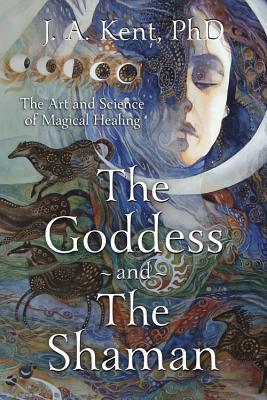
J.A. Kent, PhD, examines various occult and healing practices from a variety of traditions by interviewing practitioners as well as providing case studies of her own patients in order to present, what I can only call, her doctoral thesis of her personal magical paradigm. Her paradigm is the title of her book, The Goddess and the Shaman.
“There are strong social and medical pressures in Western-style thinking that regard those who have psychic experiences to be either fraudulent or psychotic.” pg 16
Let me briefly explain this paradigm, though I highly recommend reading the book to get it in Kent’s own words.
“The Goddess” is another name for what Kent calls the “Elphame,” essentially the other non-physical worlds that exist either alongside or on top of (depending upon who you speak to) our normal every day world. “The shaman” are the lightworkers and healers who explore these realms for various reasons including healing others of sicknesses both of the body and spirit.
I think it took a great deal of bravery to write a book like this, especially with the prevailing worldviews at work today. Well done, J.A. Kent!
The world is an enchanted, mysterious, and magical place that will reveal its many secret powers and energies to those who have the persistence and determination to unlock them.” pg 64
The trouble with spiritual healing or any type of work in the Elphame, Goddess, or whatever you want to call it, is that the practitioner exits the consensual reality of the every day world and enters non-consensual reality- the abode of the dreamers, lovers, poets, musicians, mad, etc. I have come to believe that the Western world, Western medicine especially, is not kind to those who venture outside the bounds of the normal.
Kent discusses this in depth in multiple places of this book. Suffers who could find no mundane explanation for their troubles turn to her in order to find some relief. And, encouragingly, many found healing.
“Ultimately they rejected the reductionist psychiatric explanation and embarked on their own magical journey of healing.” pg 159
Recommended for therapists and spiritual healers who are looking for more ideas about how to assist those who come to them seeking help. I enjoyed this book very much.
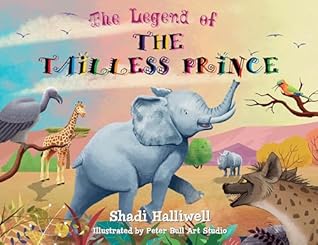
In The Legend of the Tailless Prince, a young elephant goes on a solitary adventure and loses his tail. After this calamity, he learns what really matters is what you do, not how you look.
I thought the artwork of this book was quite beautiful with brightly colored drawings illustrating the tailless prince and his exploits.
The actual story part was not so strong- I wanted to know more about this young elephant. How else does he help his herd, other than being strong and brave? What actions did his feelings lead to besides fighting the other bulls for dominance?
Also, I wanted to know more about the tailless prince’s mother. In nature, it is the female elephants of the herd that lead as they have a matriarchal society. A lot more could have been done with that character.
Recommended for children who like stories about animals as well as positive tales about how to be a shining light in the world.
In I’ll Have What She’s Having, Chelsea Handler shares amusing (often hilarious) stories and anecdotes about her family, relationships, pets and other memories from her life. The focus of the essays is all about uplifting and encouraging others through sharing the gifts and love that Chelsea has experienced throughout her life.
“This woman I’ll become, she will never be silent.” pg 4
Through the use of meditation, exercise, professional therapy, and various psychedelics, Ms. Handler has reached a relatively stable and positive stage of her life. As someone who has enjoyed her books and stand-up comedy for years, it is such a pleasure to read that she is both happy and thriving.
“None of the things other people have called me has ever really mattered. What other people say about you only matters if you believe what they are saying is true.” pg 18
She not only stands up for herself in these pages- defending her choices and lifestyle from both naysayers and judgey people of all types, but she also stands up for others. Ms. Handler has a talent for seeing how someone else is hurting and bringing them the comfort that they need most at that time.
It is a rare gift.
“Sitting around and thinking of all the people who don’t love you or don’t want to hang out with you diminishes your own light. … There are many moments in life when your own light is all you need.” pg 104
As someone who is childless by choice, Ms. Handler does not use this as an excuse to be standoffish when the young people in her life need assistance. In this book, she discusses at length how she is a matriarch/patriarch to both her family and her friends’ children. She sets an example for how to be and interact in the world- as a strong woman and parental figure.
I believe it is this type of behavior that builds strong communities, which uplifts everyone. Well done, Chelsea!
Highly recommended for readers who enjoy Ms. Handler’s comedy but also anyone who is looking for a pick-me-up in book form. I took great courage from I’ll Have What She’s Having and I hope others do too.








 The Help Desk Book Blog